
Best Lithium Bass Boat Battery Setup
Compare lithium bass boat battery setups for starting power, trolling motors, forward-facing sonar, electronics, onboard charging, and tournament fishing. Learn how to split cranking, trolling, and graph loads into a cleaner, lighter, purpose-built system.
Recommended Tournament Setup
12V 180Ah starting power, 36V + 28V trolling and sonar power, 16V dedicated graph power, plus matched EVO-TEC™ charging.
View the SetupCategory
Read Time
A modern lithium bass boat battery setup has to support more than one job. Starting power, pumps, lights, trolling motor draw, forward-facing sonar, graph voltage, accessory load, and onboard charging all affect how the system should be built. The goal is not just more amp hours. The goal is cleaner power separation, less weight, better runtime visibility, and a setup that keeps the outboard, trolling motor, and electronics performing all day.
Quick Answer
What is the best lithium bass boat battery setup?
The best lithium bass boat battery setup separates each major power role: starting and house power, trolling motor power, forward-facing sonar module power, dedicated graph power, and matched onboard charging. A serious tournament setup can use a 12V 180Ah heated marine cranking battery, a 36V + 28V dual-voltage lithium battery, a dedicated 16V 135Ah electronics battery, and EVO-TEC™ charging. Final sizing should always match your outboard requirements, trolling voltage, graph count, sonar load, accessory draw, and how long you fish.
What Does a Lithium Bass Boat Battery Setup Need to Power?
Most serious bass boat setups need dedicated power for three major systems: a cranking battery for the outboard and house loads, a trolling motor battery system for 24V or 36V thrust, and a dedicated electronics battery for graphs and forward-facing sonar.
That separation matters because each system has a different job. Starting power needs outboard compatibility and reserve capacity. Trolling motors need voltage, thrust, and runtime. Electronics need clean stable voltage so screens, sonar modules, and accessories do not fade late in the day.
Use this page as a rigging framework: define the job first, then choose the lithium battery voltage, capacity, and charger that match how you actually fish.
Common Mistake: Sizing a Bass Boat Lithium Setup by Amp Hours Alone
A bass boat lithium battery setup should not be selected by amp hours alone. Outboard starting requirements, trolling motor voltage, forward-facing sonar module demand, graph count, accessory draw, emergency reserve, wiring layout, and charger compatibility all matter. Build around each power role first, then choose the battery capacity and voltage that match your boat.
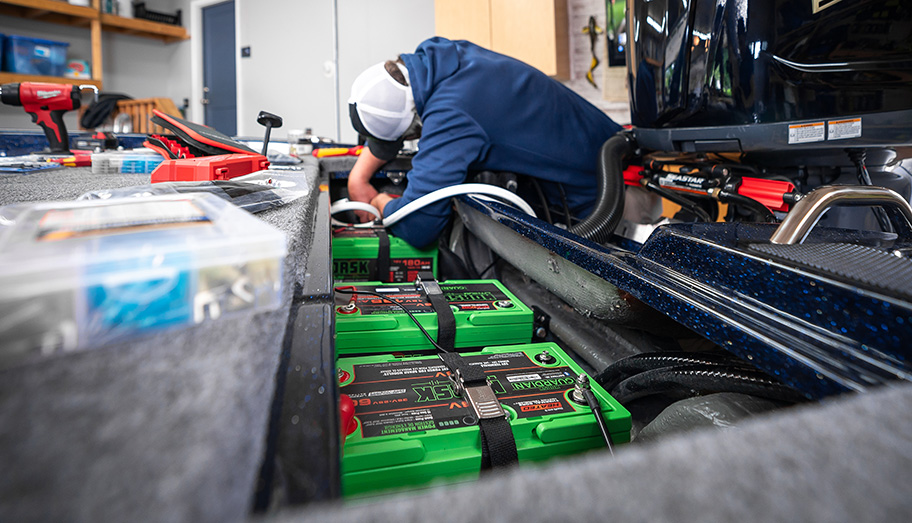
Recommended Bass Boat Lithium Battery Setups
Weekend Bass Boat Setup
One compatible lithium starting battery plus dedicated trolling motor power. Best for simpler bass boats with fewer screens and moderate accessory draw.
Forward-Facing Sonar Setup
Separate starting, trolling, and electronics power to support 24V or 36V trolling motors, multiple graphs, and forward-facing sonar.
Tournament Lithium Setup
12V 180Ah cranking power, 36V + 28V trolling and sonar module power, 16V graph power, and matched lithium charging.
Best Overall Lithium Bass Boat Battery Setup
For a fully rigged modern bass boat with a large outboard, 36V trolling motor, forward-facing sonar, and multiple large graphs, the strongest setup separates the major power demands into dedicated battery roles. This gives each system cleaner power, reduces unnecessary weight, and makes charging and troubleshooting easier.
| Boat System | Recommended Setup | Why It Matters |
|---|---|---|
| Starting / House Power | 12V 180Ah Heated Lithium Marine Cranking Battery | Starts the outboard and supports pumps, lights, accessories, and house loads while preserving emergency reserve. |
| Trolling Motor + Sonar Module | 36V + 28V 60Ah Dual-Voltage LiFePO4 Battery | 36V terminals power the trolling motor while 28V terminals support compatible forward-facing sonar modules. |
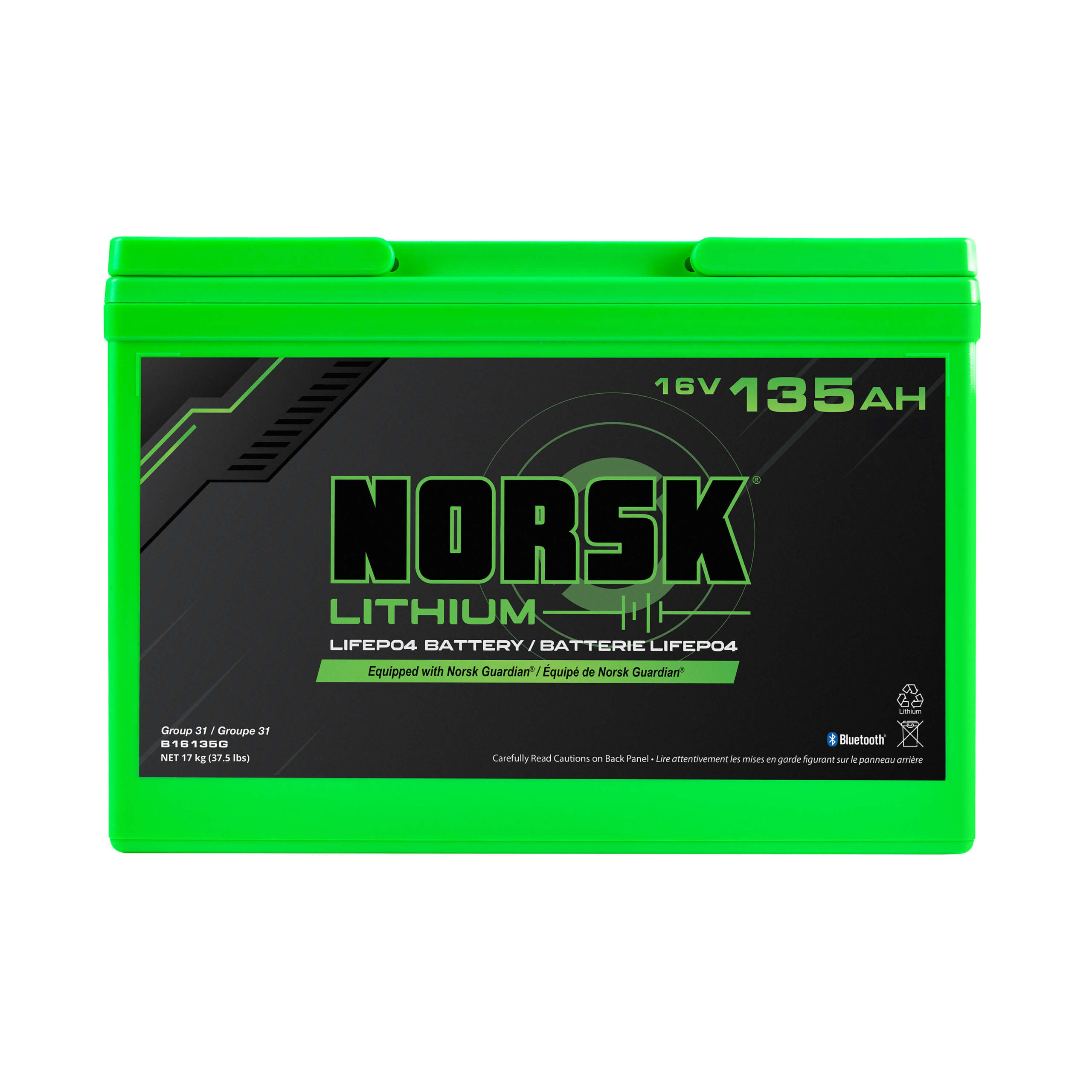
| Electronics / Graphs | 16V 135Ah LiFePO4 Deep Cycle Battery | Dedicated electronics power helps support large screens, sonar, and accessories with clean stable voltage. |
| Charging | EVO-TEC™ matched onboard charging | Matches the charge profile to the battery voltage system so 12V, 16V, and 36V lithium batteries are charged correctly. |
Always confirm outboard starting requirements, trolling motor voltage, sonar voltage, wiring layout, and charger compatibility before finalizing a lithium bass boat battery setup.
Cleaner Power Separation
Starting, trolling, and electronics loads each get a dedicated job instead of competing for the same battery reserve.
Less Weight in the Boat
Lithium batteries can reduce battery-compartment weight compared with traditional multi-battery lead-acid setups.
Better Runtime Visibility
Battery monitoring and matched charging make it easier to understand state of charge before, during, and after a fishing day.

Fewer Batteries. Cleaner Rigging. More Runtime Confidence.
Norsk Lithium® batteries simplify your setup with 24V and 36V options that replace multiple batteries in one case, while triple and dual-terminal designs make your wiring cleaner, smarter, and easier to manage. That’s how to Rig It Right™ with Norsk Lithium®.
Learn More
Key Features to Look for in Lithium Bass Boat Batteries
Emergency Start Reserve
A bass boat starting battery has to do more than start the outboard. Emergency Start Reserve helps protect starting power after a long day running electronics and accessories. Learn More ›
Deep Sleep™ Storage Protection
Bass boats often sit between trips, tournaments, or seasons. Deep Sleep™ helps reduce phantom draw during storage. Learn More ›
Norsk Guardian® App Monitoring
Bluetooth® monitoring gives anglers real-time battery visibility, including status, health, charge level, and advanced feature control. Learn More ›
IP67 Waterproof + Marine-Grade Construction
Marine batteries need to handle wet, harsh, high-vibration environments. Look for waterproof protection, durable construction, and a purpose-built BMS. Learn More ›
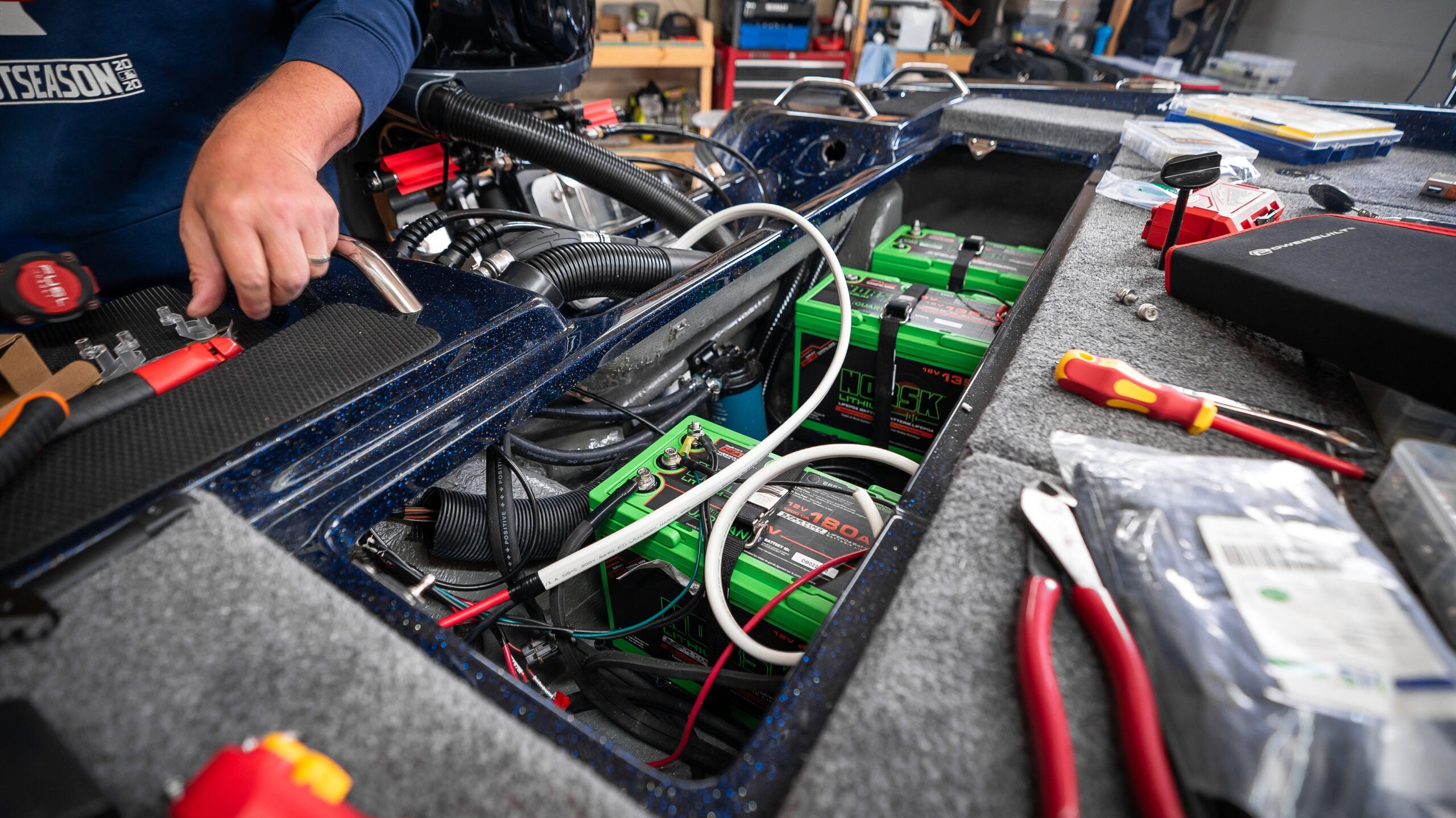
Lithium Bass Boat Battery Setup FAQ
What is the best lithium bass boat battery setup?
The best lithium bass boat battery setup separates each major power role: starting and house loads, trolling motor power, forward-facing sonar module power, dedicated graph power, and matched onboard charging. A tournament-style setup often uses a 12V 180Ah heated marine cranking battery, a 36V and 28V dual-voltage lithium battery, a 16V 135Ah electronics battery, and a compatible EVO-TEC charging system.
How many batteries do I need for a bass boat?
A simple bass boat may use a starting battery and one trolling motor battery. A fully rigged tournament bass boat often benefits from separate starting, trolling motor, and electronics batteries so each system has clean dedicated power.
Do I need a dedicated electronics battery for forward-facing sonar?
A dedicated electronics battery is recommended when you run multiple large graphs, forward-facing sonar, and high-demand accessories. It helps reduce voltage drop and keeps sonar and displays more consistent throughout the day.
What lithium battery should I use for bass boat starting power?
Starting battery choice must match your outboard manufacturer’s requirements. For compatible setups, a high-capacity lithium marine cranking battery can support starting power, pumps, lights, and house loads while reducing weight compared with lead-acid.
Is 36V better for a bass boat trolling motor?
For larger bass boats, heavy vegetation, current, wind, and tournament use, 36V trolling motor systems are common because they provide stronger thrust and longer performance than smaller voltage systems.
Can one battery power a trolling motor and sonar?
Some dual-voltage lithium batteries can simplify rigging by providing separate outputs for different voltage needs. The right choice depends on trolling motor voltage, sonar module requirements, wiring, and charger compatibility.
Are lithium batteries worth it for bass boats?
Lithium batteries are worth considering for bass boats because they reduce weight, provide more usable capacity, hold steadier voltage, charge efficiently, and can simplify modern rigging when matched correctly to starting, trolling, and electronics loads.
What charger do I need for a lithium bass boat setup?
Use a lithium-compatible onboard charger matched to the voltage and battery type in the boat. A mixed 12V, 16V, 24V, 28V, or 36V system should be charged with a setup designed for those specific batteries and charge profiles.

Need help choosing?
HAVE MORE QUESTIONS?
Ask Odin for help finding the right Norsk Lithium setup.
Build Your Lithium Bass Boat Battery Setup
Explore Norsk Lithium marine batteries built for starting power, trolling motors, forward-facing sonar, electronics, charging, and serious days on the water.
Find Your PowerSuperior Lithium Power™ for serious bass boat setups.
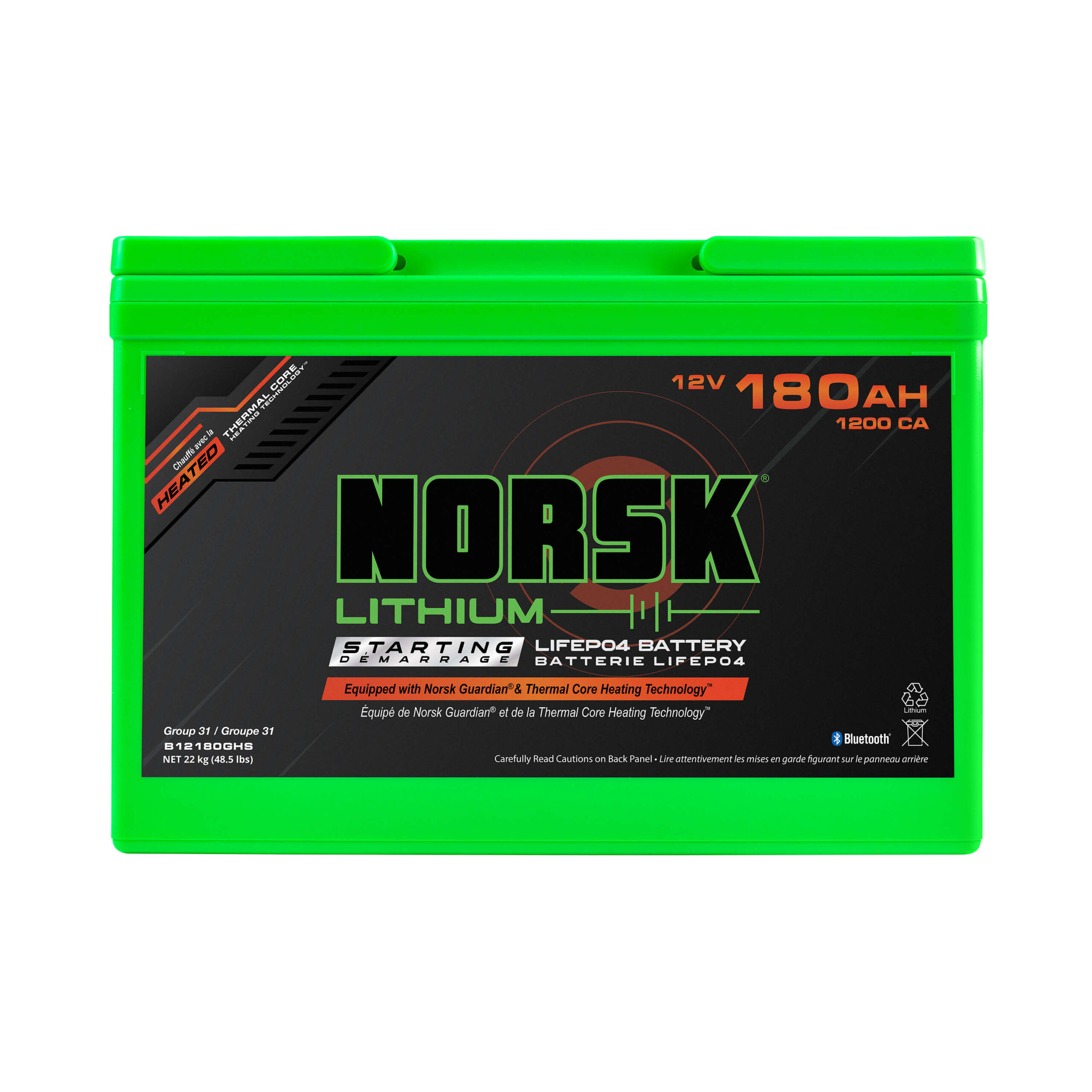
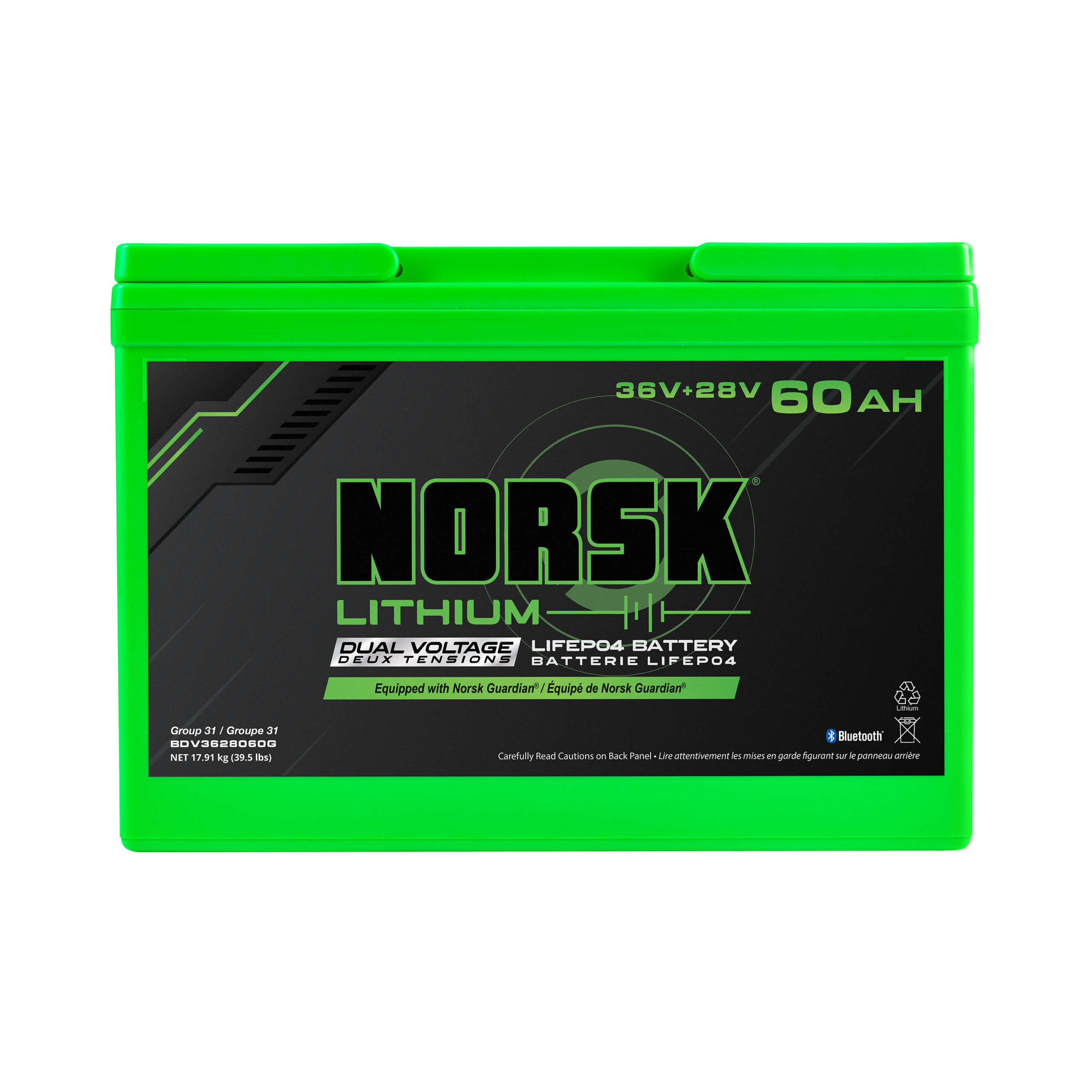

How Pat Schlapper Powers His Elite Series Setup
See how 2X Bassmaster Elite Series Champion Pat Schlapper rigs his trolling motor, forward-facing sonar, and electronics with Norsk Lithium® power — a real-world look at what it means to Rig It Right™.
View Pat’s Setup →